
VASER Liposuction is an ultrasound-assisted body-contouring procedure designed to help break down localized fat before it is removed through liposuction. The procedure is planned individually according to fat distribution, skin quality, body proportions, and the desired degree of contour definition.


Localized fat deposits may remain in certain areas of the body despite regular exercise, balanced nutrition, and relatively stable body weight. These deposits can affect body proportions and make certain contours appear less defined.
VASER Liposuction is a form of ultrasound-assisted liposuction. During the procedure, ultrasound energy is delivered to the targeted fatty tissue before the loosened fat is removed through suction. This technology may be used as part of conventional or more detailed body-contouring procedures, depending on the patient’s anatomy and the surgeon’s treatment plan.
Like other forms of liposuction, VASER Liposuction is not a weight-loss treatment or a treatment for obesity. Its primary purpose is to reshape selected areas by reducing localized subcutaneous fat deposits.
VASER Liposuction may be considered for individuals who have:
The procedure is generally most appropriate for body contouring rather than major weight reduction. Patients with significant obesity, substantial excess skin, or major weight fluctuations may require a different treatment strategy.
General health, medical conditions, previous surgery, smoking status, medications, skin quality, and the extent of the planned operation should all be evaluated before surgery.
Planning begins with a detailed assessment of the treatment areas and the overall relationship between different body regions.
During the consultation, the following factors may be evaluated:
The aim is not simply to remove the maximum possible amount of fat. Successful body contouring requires controlled fat reduction while maintaining smooth transitions between treated and untreated areas.
The surgeon also determines whether standard contouring or a more detailed definition-based approach is appropriate. In some patients, combining several body areas may create a more balanced result, while in others a more limited procedure may be safer and more appropriate.
VASER Liposuction is generally performed through small incisions placed near the selected treatment areas.
A fluid solution may first be introduced into the tissues according to the surgical technique. A specialized ultrasound probe is then inserted through the small incisions and used to deliver ultrasound energy to the targeted fat.
The ultrasound energy helps disrupt or emulsify the fat before it is removed using a liposuction cannula and controlled suction. VASER is therefore considered a form of ultrasound-assisted liposuction rather than a completely separate alternative to liposuction.
The extent of treatment and type of anesthesia vary according to:
In selected cases, VASER technology may be used as part of more detailed body-sculpting techniques designed to improve contour definition around anatomical landmarks.
Swelling, bruising, tenderness, soreness, tightness, and temporary changes in skin sensation may occur after VASER Liposuction, as with other liposuction procedures.
Compression garments are commonly recommended to support the treated areas and help manage postoperative swelling. The duration of garment use depends on the areas treated and the surgeon’s individual protocol.
During recovery, patients generally receive instructions regarding:
The recovery period depends on the number of areas treated, the extent of fat removal, and whether additional surgical procedures were performed.
Light daily activity is usually resumed gradually, while strenuous exercise and heavy physical activity should be postponed until sufficient healing has occurred. Swelling may continue to decrease over several weeks or months before the final contour becomes fully apparent.
An initial change in body contour may be noticeable shortly after surgery, but swelling can temporarily hide the final result.
As postoperative swelling decreases, the treated areas gradually become more defined. The body contour may continue to improve over the following months as residual swelling resolves and the tissues adapt.
The final appearance should therefore not be evaluated during the first days or weeks after surgery.
The degree of definition achieved depends on several factors, including:
VASER technology can assist with controlled fat disruption and removal, but no technology can guarantee perfectly smooth contours or a specific degree of skin tightening in every patient. Evidence regarding advantages of ultrasound-assisted technologies over conventional liposuction continues to evolve.
The contour changes achieved through VASER Liposuction can be long-lasting when body weight remains relatively stable.
Fat cells removed during liposuction do not simply return in the same pattern. However, the remaining fat cells can still enlarge with significant weight gain, which may alter the proportions of both treated and untreated areas.
The long-term appearance may also be influenced by:
Maintaining a stable weight, regular physical activity, and a balanced lifestyle can help preserve the achieved contour.
As with every surgical liposuction procedure, VASER Liposuction involves potential risks and complications.
These may include:
Because VASER uses ultrasound energy, ultrasound-assisted liposuction also carries a specific risk of thermal or heat-related injury. Appropriate technique and careful control of energy delivery are therefore important parts of surgical safety.
As with other forms of liposuction, larger-volume procedures and combinations with multiple surgical operations require additional safety considerations.
Traditional liposuction removes fat mechanically using a cannula and suction. VASER Liposuction uses ultrasound energy to help disrupt and emulsify the targeted fat before suction removal.
VASER is therefore a form of ultrasound-assisted liposuction rather than an entirely different category of surgery.
No. VASER Liposuction is designed for body contouring and localized fat reduction rather than treatment of obesity or major weight loss.
Depending on the patient’s anatomy, areas such as the abdomen, waist, back, hips, thighs, arms, chest, chin, and neck may be treated. The appropriate areas are determined during individual surgical planning.
VASER is sometimes used as part of procedures aimed at achieving more detailed contouring, and some studies have investigated possible effects on tissue contraction. However, the degree of skin adaptation varies significantly between patients, and VASER Liposuction should not be presented as a guaranteed substitute for surgical skin removal when substantial laxity is present. Current evidence comparing skin-retraction technologies remains variable.
VASER Hi-Def refers to a more detailed body-contouring approach in which fat is selectively reduced around underlying muscular anatomy to create greater visual definition.
It requires careful patient selection and differs from standard liposuction because the goal is not only overall fat reduction but more detailed anatomical sculpting.
In selected patients, it may be combined with procedures such as tummy tuck, body lift, fat transfer, or other contouring operations.
However, combining procedures increases the extent of surgery and should be evaluated according to the patient’s general health, total operating time, treatment areas, and individual safety considerations.
VASER Liposuction requires small incisions through which the ultrasound probe and liposuction cannulas are introduced. Small scars therefore remain at the access points.
Their number and location depend on the areas treated and the surgical plan.
The timing varies according to the extent of surgery and individual healing. Light activity is generally resumed gradually, while strenuous exercise should be postponed until the surgeon confirms that recovery has progressed sufficiently.
The fat cells that are removed do not return in the same pattern, but remaining fat cells can enlarge with future weight gain. Maintaining a relatively stable body weight is therefore important for preserving the result.
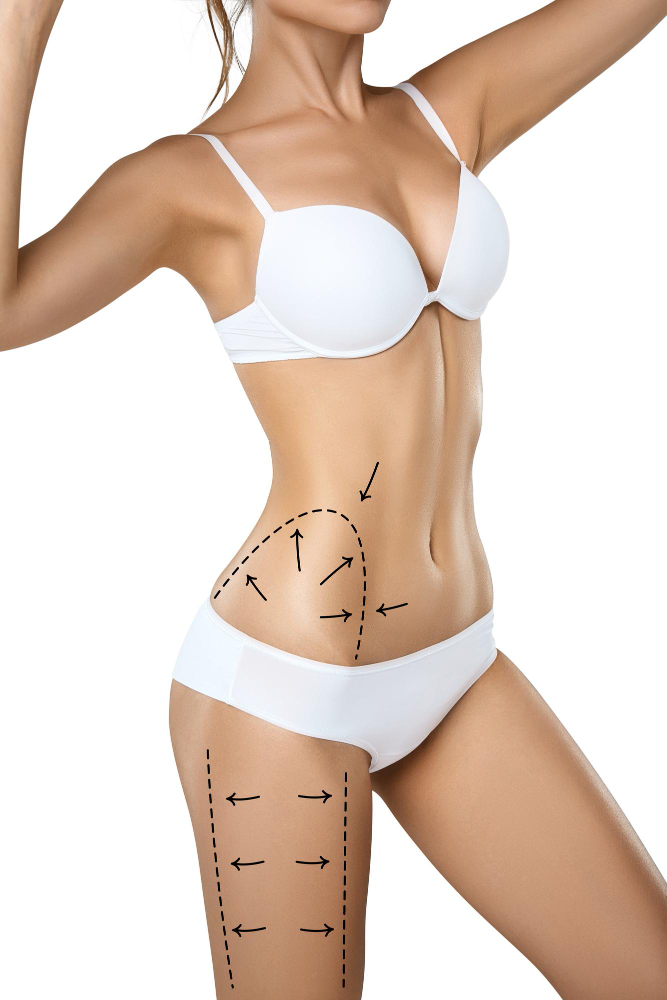
There is no single VASER Liposuction plan that is suitable for every patient.
Some individuals may require contouring of a single localized area, while others may benefit from treating several connected regions to create smoother transitions and more balanced proportions. In selected patients, a higher-definition approach may be considered when anatomy, skin quality, and body composition are appropriate.
During the consultation, fat distribution, skin elasticity, muscle structure, body proportions, weight stability, previous surgery, general health, and the patient’s expectations are evaluated together.
It is also determined whether VASER Liposuction alone is likely to provide an appropriate result or whether significant skin laxity or other anatomical concerns require an additional or alternative surgical procedure.
The goal of personalized planning is not maximum fat removal, but controlled and proportionate body contouring while prioritizing surgical safety.
The information provided on this page is intended for general informational purposes only. It does not replace diagnosis, treatment, or personalized medical advice. The appropriate surgical technique should be determined after an individual examination by a specialist in Plastic, Reconstructive and Aesthetic Surgery.
Formu doldurarak estetik cerrahi süreciniz hakkında ilk adımı atabilirsiniz. Ekibimiz, talebiniz doğrultusunda sizinle iletişime geçerek uygun görüşme planlamasını sağlayacaktır.