
Liposuction is a body-contouring procedure designed to remove localized fat deposits from selected areas of the body and improve overall proportions. It is intended for contour refinement rather than weight loss and is planned according to fat distribution, skin quality, body proportions, and individual expectations.


Localized fat deposits may remain in certain areas despite regular exercise, healthy nutrition, and relatively stable body weight. These deposits can affect the overall balance and contour of the body.
Liposuction removes selected subcutaneous fat deposits through small incisions using thin cannulas and suction. The aim is not simply to remove as much fat as possible, but to reshape specific areas and create smoother transitions between different body regions.
The procedure is not a treatment for obesity, cellulite, or significant skin laxity. Patients with good skin elasticity generally achieve better contour adaptation after fat removal, while individuals with considerable loose skin may require additional skin-tightening or excisional procedures.
Liposuction may be considered for individuals who have:
Ideal candidates are generally healthy adults with good muscle tone and skin elasticity and without medical conditions that significantly impair healing. Smoking and vaping status may also affect surgical planning and recovery.
Liposuction is generally more suitable for body contouring than for reducing overall body weight. Patients seeking treatment primarily for obesity or major weight loss usually require a different medical approach.
Final suitability is determined after evaluating general health, previous surgeries, medications, weight history, skin quality, and individual surgical risk factors.
Liposuction planning begins with a detailed examination of the treatment areas and overall body proportions.
During the consultation, the following factors may be evaluated:
The treatment plan is determined according to which areas require contouring and how those areas relate to the surrounding body regions.
Liposuction should not be planned as isolated fat removal without considering overall body shape. Removing too much fat from one area or creating abrupt transitions between treated and untreated regions can affect contour quality.
The amount of fat that can be removed safely also varies between patients. The number of treated areas, the extent of surgery, general health, and whether other procedures are performed at the same time are all considered during planning.
Liposuction is performed through small incisions made near the treatment areas.
A thin hollow tube called a cannula is inserted through these incisions into the subcutaneous fat layer. The cannula is moved through the selected tissue planes, and loosened fat is removed using controlled suction.
Depending on the technique and extent of treatment, fluid may first be introduced into the tissues to help control bleeding and facilitate fat removal. The exact technique varies according to the surgical plan and the technology used.
The aim is to reduce selected fat deposits while creating smooth and proportionate transitions between the treated areas and surrounding tissues.
Liposuction may be performed alone or combined with other body-contouring procedures in selected patients. Combining multiple procedures increases the extent of surgery and should be planned according to individual safety considerations.
Swelling, bruising, tenderness, soreness, and temporary changes in sensation are common during the early recovery period after liposuction.
Compression garments are often recommended to support the treated areas and help manage postoperative swelling. The duration of garment use depends on the areas treated and the surgeon’s individual recommendations.
Recovery varies according to the number of areas treated and the volume of fat removed. During the first week, activity is usually significantly reduced. Many patients begin to feel more comfortable during the second and third weeks and may gradually return to work depending on the physical demands of their occupation.
Patients generally receive individualized instructions regarding:
Light movement is generally encouraged according to medical guidance, while strenuous activity should be limited until sufficient healing has occurred.
An initial reduction in fullness may be noticeable shortly after liposuction, but swelling can temporarily hide the final contour.
As swelling gradually decreases, the treated areas become more defined. Significant improvement is often visible within the first several weeks, but residual swelling may continue for several months.
The skin also needs time to adapt to the new underlying contour. Patients with good skin elasticity generally experience better skin contraction, while loose or thin skin may not reshape as effectively after fat removal.
The final result should therefore be evaluated only after sufficient swelling has resolved and the tissues have adapted.
The contour changes achieved through liposuction can be long-lasting when body weight remains relatively stable.
Fat cells removed during liposuction do not return in the same way. However, the remaining fat cells can still increase in size if significant weight gain occurs. This can alter the overall body contour, including both treated and untreated areas.
Natural aging, changes in skin elasticity, pregnancy, and major weight fluctuations can also influence the appearance of the treated areas over time.
Maintaining a stable weight, regular physical activity, and a healthy lifestyle can help preserve the body-contouring result.
As with every surgical procedure, liposuction involves potential risks and complications.
These may include:
The risk profile may increase when larger areas are treated or when liposuction is combined with additional surgical procedures. General health, smoking status, the extent of treatment, and individual healing characteristics are therefore important parts of preoperative evaluation.
Liposuction can also make existing skin irregularities or cellulite more noticeable in some patients and should not be considered a specific cellulite treatment.
No. Liposuction is designed for body contouring rather than general weight loss. It is most effective for localized fat deposits that remain despite a healthy lifestyle and relatively stable weight.
Liposuction can be used on selected areas such as the abdomen, waist, hips, thighs, arms, back, chin, neck, and other regions where localized fat accumulates. The appropriate treatment areas depend on individual anatomy and skin quality.
Liposuction removes fat but does not directly remove significant excess skin. Patients with good skin elasticity may experience better adaptation of the skin to the new contour, while substantial skin laxity may require a skin-removal procedure.
Liposuction is not considered an effective treatment for cellulite. In some cases, existing skin dimpling or irregularities may remain or become more noticeable after fat removal.
The fat cells that are removed do not simply regenerate in the same pattern. However, remaining fat cells throughout the body can enlarge with weight gain, which may alter the result. Maintaining a stable weight is therefore important for long-term contour preservation.
The timing depends on the number of areas treated, the extent of surgery, and the physical demands of the patient’s occupation. Many patients begin feeling significantly better during the second and third weeks, although some may return to lighter work earlier.
Light activity is generally introduced gradually, while more demanding exercise should be postponed during the early recovery period. Many patients gradually return to more normal activity over several weeks, but the exact timing should be determined according to individual healing.
Liposuction requires small incisions for cannula access, so small scars remain at these entry points. Their number and location depend on the treatment areas and surgical technique. Scar appearance varies according to individual wound healing.
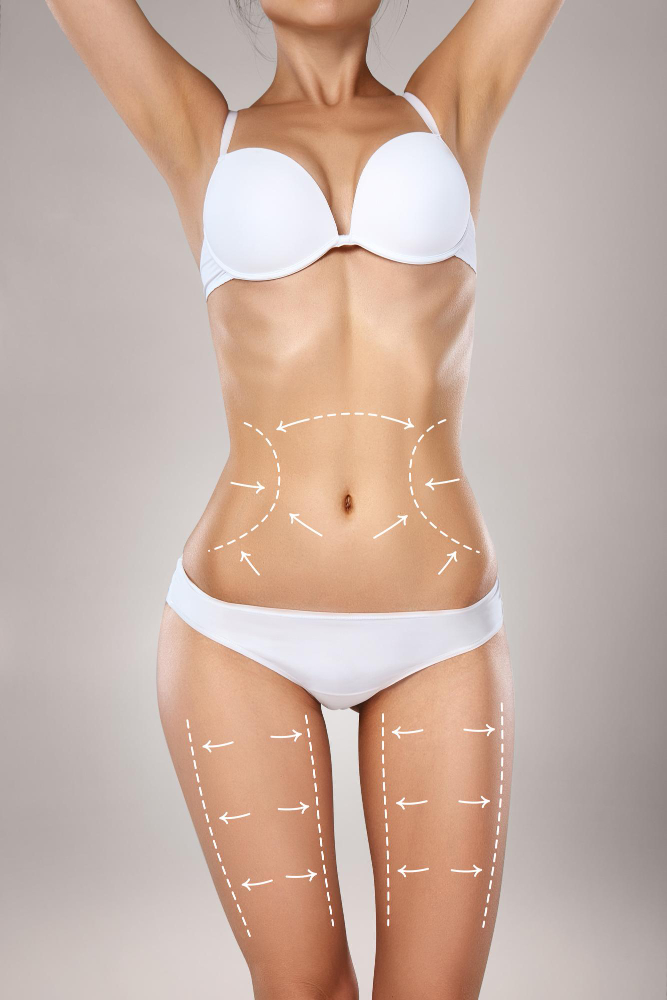
There is no single liposuction plan that is suitable for every patient.
Some individuals may have localized fat in one specific region, while others may require contouring of several connected areas to create smoother and more proportionate transitions. Skin quality, body structure, fat distribution, weight stability, and individual expectations must therefore be evaluated together.
During the consultation, the areas of concern are assessed within the context of the entire body contour. It is also determined whether liposuction alone is likely to provide an appropriate result or whether excess skin or other anatomical concerns require an alternative or combined procedure.
The aim of personalized planning is not maximum fat removal but balanced and controlled body contouring while prioritizing surgical safety.
The information provided on this page is intended for general informational purposes only. It does not replace diagnosis, treatment, or personalized medical advice. The appropriate surgical plan should be determined after an individual examination by a specialist in Plastic, Reconstructive and Aesthetic Surgery.
Formu doldurarak estetik cerrahi süreciniz hakkında ilk adımı atabilirsiniz. Ekibimiz, talebiniz doğrultusunda sizinle iletişime geçerek uygun görüşme planlamasını sağlayacaktır.